
Foodservice & distribution
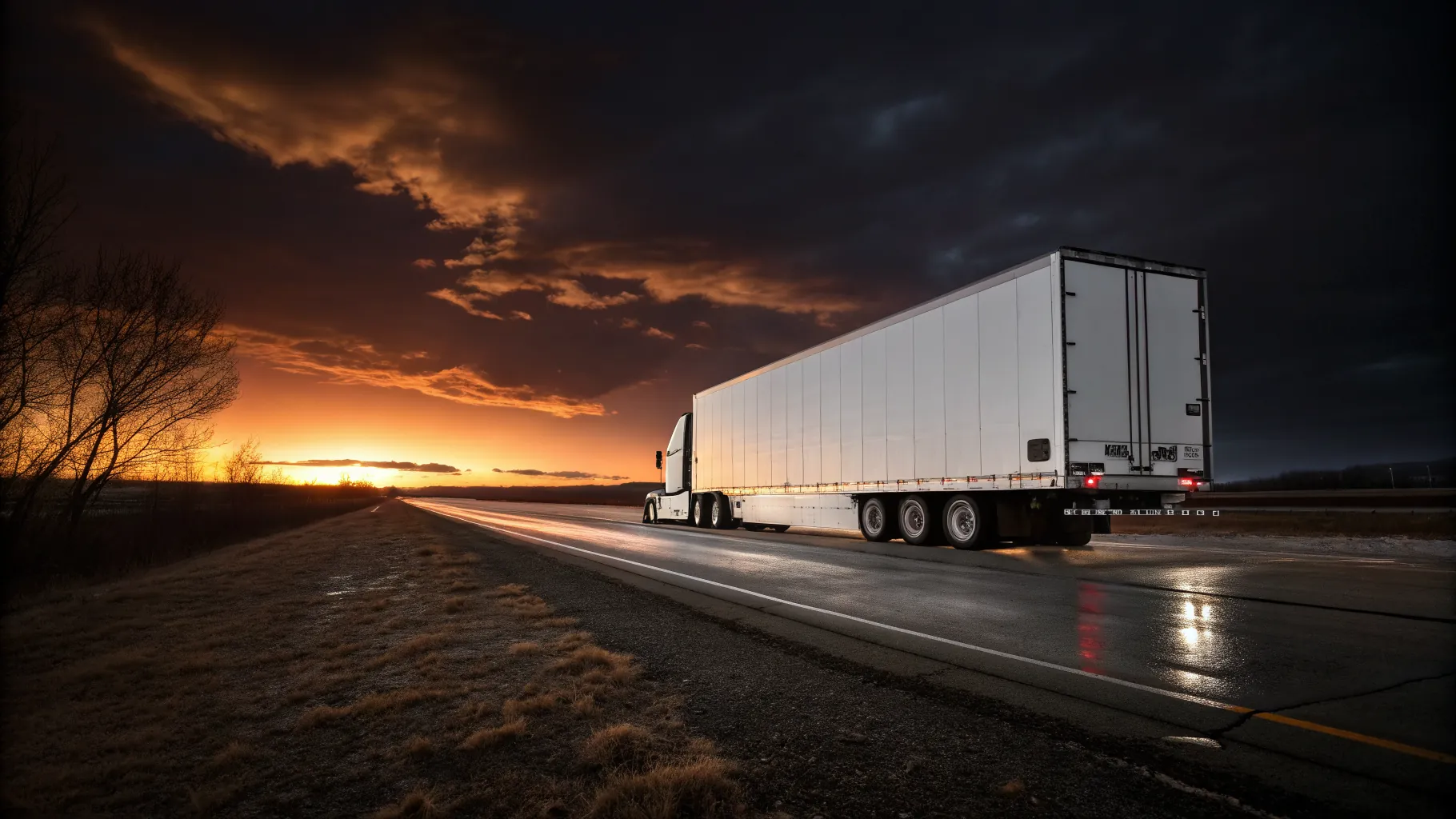
Product in the country, on a truck, on your dock.
Distributors and foodservice operators need availability and a straight answer about where the load is. We import as the party of record and move it ourselves, which is why both answers come from one team.
Mixed LTL
Loads build at the gateway, so a pallet of Peruvian blueberries and a pallet of Mexican berries can ride the same truck instead of forcing two full loads.
Full truckloads
For programmed volume, full truckloads move direct from the crossing or the port to your warehouse on a repeating schedule.
Unbroken cold chain
Cold chain is picked up on the US side of the crossing and held through consolidation. Temperature is our problem until the load is on your dock.
One team, one call
The people who bought the fruit are the people tracking the truck. A short load and a quality claim go to the same place.
Gateways
Seven doors, chosen by origin.
Land crossing & sea port
California
West Coast distribution
The western door. Product entering through California serves the West Coast directly and shortens the run to the Pacific Northwest and the Mountain West, without dragging a load across the country from a Gulf or East Coast entry.
Land crossing
McAllen
Mexican product
The Rio Grande Valley crossing, and the busiest door in the network. Mexican fruit crosses here, the cold chain is picked up on the US side, and loads build for every outbound lane. That is what makes a mixed truckload out of Mexico practical rather than theoretical.
Sea port
Houston
Latin America, Gulf distribution
The Gulf port. Houston takes container volume straight into the Texas and south-central markets, and gives the network a second Texas door, so a delay at one entry does not stop a program.
Air & sea port
Miami
South and Central America
The fast door for South American fruit: air freight for the opening weeks of a season, reefer containers for the volume behind it. Also the shortest path into the Southeast.
Air & sea port
New York
Northeast retail and foodservice
Air freight for the opening weeks of a Southern Hemisphere season and containers for the volume that follows, landing straight into the largest consumer market in the country.
Sea port
Philadelphia
Chile, Peru and the Southern Cone
The historic South American fruit port and the anchor of the Northeast program. Containers discharge within a day's drive of most East Coast distribution centers.
Sea port
New Jersey
Northeast distribution
The East Coast container complex. Volume discharges within a short run of the New York and New Jersey distribution centers, which is where a Northeast retail program is actually won or lost.
Outbound lanes
Where it goes from there.
| Region | Markets served | Fed from |
|---|---|---|
| Northeast | New York/New Jersey metro, Philadelphia, Boston, Baltimore and Washington | New Jersey, New York, Philadelphia |
| Southeast | Florida, Georgia, the Carolinas, Tennessee | Miami, Houston |
| Midwest | Chicago, Detroit, Minneapolis, Kansas City, the Ohio valley | McAllen, Houston, New Jersey |
| South Central | Texas, Oklahoma, Louisiana, Arkansas | McAllen, Houston |
| West | California, the Pacific Northwest, the Mountain West, the Southwest | California, McAllen |
Transit times are quoted per lane and per season rather than published. A printed number becomes a promise, and the honest answer depends on the crossing, the port and the week.
Ask what is available